Visualizing the Future of Finance: Integrating the Digital Dollar Currency Icon Symbol into Modern Design
The financial landscape is undergoing a profound transformation, shifting from physical cash and traditional banking interfaces to decentralized networks, digital wallets, and central bank digital currencies. As this infrastructure evolves, so too must the visual language we use to communicate it. For professionals, creators, and entrepreneurs building the next generation of fintech applications, the Digital Dollar Currency Icon Symbol has emerged as a critical design asset. It is no longer sufficient to rely on generic dollar signs or outdated coin imagery; the market demands a specific visual identifier that bridges the gap between established fiat trust and digital innovation.
This shift represents more than a mere aesthetic update. It reflects changing user expectations regarding security, speed, and technological sophistication. When designing for web platforms, mobile UI, infographics, or print collateral, utilizing a dedicated digital dollar currency icon vector symbol ensures that your project communicates relevance and precision. Whether you are a freelancer crafting a pitch deck for a crypto startup or a marketing director overseeing a rebrand for a neobank, understanding how to leverage these assets in PNG, SVG, EPS, and JPG formats is essential for maintaining professional standards and visual clarity.
The Semiotics of Digital Finance
To understand why the Digital Dollar Currency Icon Symbol is gaining traction, we must first look at the broader industry trends driving its adoption. We are currently witnessing the convergence of traditional finance (TradFi) and decentralized finance (DeFi). Users are increasingly managing hybrid portfolios that include both government-backed currency and blockchain-based assets. In this context, visual ambiguity is a liability. A standard "$" sign can imply cash, credit, or crypto depending on the context, leading to cognitive friction.
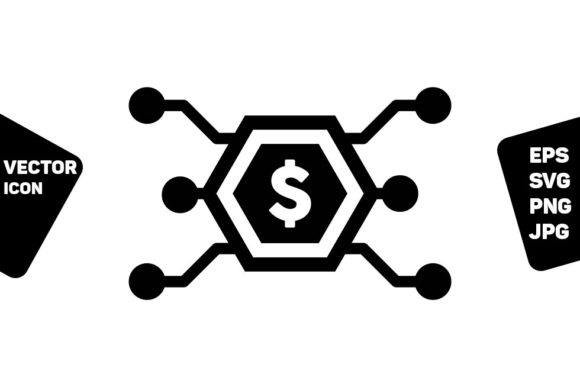
The digital dollar icon solves this by acting as a semantic anchor. It typically combines the familiarity of the dollar sign with motifs associated with technology, such as circuit patterns, pixelation, network nodes, or shield outlines. This synthesis tells the user immediately that they are interacting with a digitized asset. For UI designers, this distinction is vital for reducing error rates in transaction flows. When a user sees a distinct icon for digital dollars versus traditional bank transfers, they adjust their mental model regarding settlement times and irreversibility. This subtle visual cue enhances the overall user experience by aligning interface elements with the underlying technical reality.
Meeting Evolving Workflow Demands
Creative workflows have accelerated significantly in recent years. The era of bespoke illustration for every single project element is largely over for agile teams. Marketers and developers now operate in rapid iteration cycles where speed cannot come at the cost of quality. This is where the availability of pre-designed, high-quality vector assets becomes a strategic advantage.
Professionals are paying attention to these specific icon sets because they fit seamlessly into modern design systems. A flat color glyph pictogram illustration offers maximum versatility. Unlike skeuomorphic designs that mimic 3D metallic coins, flat glyphs scale perfectly across devices. They maintain legibility on a 16px favicon and remain crisp on a 4K retina display or a large-format printed banner. This responsiveness addresses the changing needs of cross-platform development, where a single asset must perform consistently across iOS, Android, web browsers, and physical marketing materials.
Technical Versatility Across File Formats
The utility of a digital dollar currency icon vector symbol is defined by its file format availability. Understanding when and why to use specific formats is a hallmark of professional execution. Providing assets in PNG, SVG, EPS, and JPG covers the entire spectrum of digital and print production requirements.
- SVG (Scalable Vector Graphics): This is the gold standard for web and UI design. Because SVGs are code-based XML files, they are infinitely scalable without losing resolution. More importantly, they are style-able via CSS. A developer can change the color of a digital dollar icon on hover or animate its opacity during a loading state without needing multiple image files. For responsive websites and progressive web apps, SVG is non-negotiable.
- PNG (Portable Network Graphics): While vectors rule the web, raster transparency remains essential for specific use cases. PNG files support alpha channels, making them perfect for overlaying icons onto complex backgrounds in presentation software, video editing suites, or content management systems that do not support inline SVG. High-resolution PNGs ensure that app icons and social media graphics retain sharp edges against varied backdrops.
- EPS (Encapsulated PostScript): For print projects, EPS is the industry benchmark. Whether you are designing business cards, conference signage, or annual reports, EPS files integrate seamlessly with Adobe Illustrator and other professional layout tools. They preserve vector data for commercial printing processes, ensuring that the Digital Dollar Currency Icon Symbol looks as professional on paper as it does on screen.
- JPG (Joint Photographic Experts Group): While less common for icons due to lack of transparency, JPG remains relevant for compatibility. Legacy systems, certain email clients, and quick-preview environments often require standard raster formats. Including a high-quality JPG ensures that stakeholders can view and approve assets without specialized software, facilitating smoother communication loops.
Strategic Application in Business and Marketing
Beyond technical specifications, the choice of iconography influences brand perception. In the competitive fintech sector, trust is the primary currency. Startups and established institutions alike are using refined digital currency symbols to signal maturity. A poorly designed or pixelated icon suggests a lack of attention to detail, which users subconsciously associate with security risks. Conversely, a polished, professionally crafted glyph conveys stability and competence.
Consider the application in educational content and infographics. As digital literacy regarding CBDCs (Central Bank Digital Currencies) and stablecoins grows, there is a surging demand for explanatory content. Content creators and educators need visual shorthand to explain complex concepts like tokenization, wallet custody, and smart contracts. A clear digital dollar icon serves as a recurring visual motif that helps audiences track the flow of value through diagrams and charts. This reduces cognitive load and makes dense financial information more digestible for general consumers.
Furthermore, these symbols are integral to lifestyle and consumer-facing branding. Digital finance is no longer niche; it is part of daily commerce. Merchants displaying payment options, influencers discussing personal finance, and apps tracking spending habits all require iconography that feels native to the digital ecosystem. The flat color aesthetic aligns with contemporary design trends seen in major operating systems and popular apps, helping new financial products feel familiar rather than intimidating.
Future-Proofing Visual Assets
As we look forward, the relevance of the Digital Dollar Currency Icon Symbol will only increase. Regulatory frameworks are solidifying, and interoperability between different digital currency systems is improving. Designers who adopt standardized yet distinctive visual languages now are positioning themselves ahead of the curve. The move toward accessible design also favors well-crafted vector glyphs; they can be easily adapted for high-contrast modes or screen reader compatibility when properly tagged in SVG code.
For freelancers and agencies, offering clients a comprehensive suite of these assets demonstrates foresight. It shows an understanding that a brand’s visual identity must live across multiple mediums simultaneously. By securing rights to or creating high-quality digital dollar assets in all four key formats, creatives eliminate future bottlenecks. There is no need to return to the drawing board when a client pivots from a web launch to a print campaign; the asset library already supports the transition.
Ultimately, the integration of these symbols is about effective communication. Technology changes rapidly, but the principles of clear visual hierarchy and semantic accuracy remain constant. The digital dollar currency icon vector symbol is not just a graphic; it is a functional component of the digital economy's interface. Whether rendered as a lightweight SVG in a React component or a vibrant EPS on a trade show booth, it performs the heavy lifting of translating abstract financial code into human-understandable value. For professionals navigating this space, mastering these visual tools is as important as understanding the underlying blockchain or banking protocols they represent.
In conclusion, the demand for precise, versatile, and aesthetically modern financial iconography is a direct response to the maturation of the digital asset market. By utilizing flat color glyph pictograms available in PNG, SVG, EPS, and JPG, designers and businesses ensure their communications are technically sound, visually appealing, and contextually accurate. As digital transactions become the norm, these icons will serve as the enduring signposts of a new economic era, guiding users through their wallets, assets, and financial journeys with clarity and confidence.