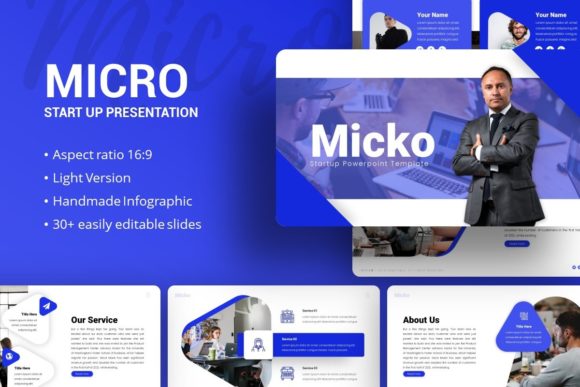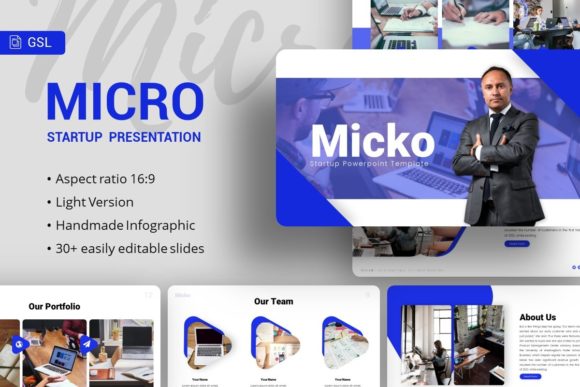
Google Slides Template - Micro: Streamlining Visual Communication for Modern Workflows
In the fast-paced environment of digital business and creative production, the friction between having an idea and presenting it visually can often derail momentum. The Google Slides Template - Micro addresses this specific bottleneck by providing a structured yet flexible framework for visual communication. Rather than viewing a presentation template as merely a collection of pretty backgrounds, professionals should approach it as a pre-built design system that accelerates the transition from raw data to compelling narrative. This template serves as a foundational asset in broader project workflows, allowing entrepreneurs, marketers, and educators to bypass the initial blank canvas paralysis and focus immediately on content strategy and message refinement.
The "Micro" designation suggests a focus on efficiency and modularity. In practical application, this means the template is designed for users who need to iterate quickly without sacrificing professional polish. Whether you are preparing a pitch deck for investors, updating a company profile for stakeholders, or organizing a personal portfolio for potential clients, the utility lies in its adaptability. It fits into the workflow not just as a final output container, but as a thinking tool that helps structure complex information into digestible, visually coherent segments before the actual presentation takes place.
Integrating the Template into Project Phases
Effective use of the Google Slides Template - Micro extends beyond the final delivery stage. Its true value emerges when integrated across different phases of a project lifecycle. Understanding where this asset fits prevents it from becoming an afterthought and instead makes it a driver of clarity.
Pre-Project Planning and Ideation
Before a single word of copy is finalized, the template can serve as a storyboarding device. With 35 distinct slides available, users can map out the logical flow of a proposal or report. During the planning phase, select layouts that match your intended narrative arc rather than focusing on specific content. For example, if you are launching a startup, dragging in a "Problem/Solution" infographic slide early in the process forces you to articulate those elements concisely. This visual scaffolding helps identify gaps in logic or missing data points long before expensive design hours are spent. It transforms the abstract planning process into a tangible checklist of required assets and arguments.
Active Execution and Collaboration
During the execution phase, consistency is often the first casualty of collaboration. When multiple team members contribute to a deck, formatting drift occurs rapidly. Because this template is based on Master Slides, it enforces global consistency. Changes made to the master typography, color palette, or logo placement propagate instantly across all 35 slides. This feature is critical for agencies and corporate teams working under tight deadlines. It allows writers to focus on messaging and designers to focus on custom data visualization without worrying about misaligned text boxes or conflicting fonts. The pixel-perfect illustrations and resizable graphics ensure that even when content volume changes, the visual integrity remains intact.
Post-Project Repurposing and Archiving
After a presentation is delivered, the work often needs to be repurposed for other channels. The modular nature of the Google Slides Template - Micro facilitates this downstream workflow. Individual slides can be exported as high-resolution images for social media, embedded in blog posts, or converted into PDF one-pagers for email follow-ups. Because the graphics are vector-based and editable, they scale without quality loss, making them suitable for both screen presentations and printed handouts. Furthermore, maintaining a library of customized "Micro" decks creates a proprietary knowledge base. Future projects can pull from these established layouts, reducing the setup time for subsequent pitches or reports by significant margins.
Cross-Platform Compatibility and Asset Management
While branded as a Google Slides resource, the inclusion of a PowerPoint .PPTX file ensures this template integrates smoothly into hybrid tech stacks. Many organizations operate in mixed environments where some stakeholders prefer Microsoft Office while others rely on Google Workspace. Having native files for both platforms eliminates conversion errors that often break formatting, animations, or font rendering. This dual compatibility is essential for external-facing communications where you cannot control the recipient's software environment.
The template also interacts seamlessly with external asset libraries. The included vector icon set reduces dependency on third-party icon packs, keeping file sizes manageable and licensing simple. However, users should note that demo images are for preview purposes only. This distinction is actually a workflow advantage; it encourages the integration of authentic, project-specific photography rather than generic stock imagery. By using the built-in picture placeholders with drag-and-drop functionality, teams can maintain a consistent mask and aspect ratio across the deck while swapping in real project photos, product shots, or team headshots. This ensures the final output feels bespoke and credible rather than templated and generic.
Practical Implementation Strategies for Diverse Use Cases
Different professional contexts require different approaches to customization. The versatility of the Google Slides Template - Micro allows it to adapt to specific industry needs through targeted modifications.
- Creative Agencies and Portfolios: Focus on the image-heavy layouts. Utilize the full-bleed photo slides to showcase work, and use the minimalist text slides for case study breakdowns. The handcrafted infographics are particularly useful for explaining creative processes or campaign results to clients who may not be design-literate.
- Startups and Pitch Decks: Prioritize the data visualization slides. Investors scan decks quickly, so use the pre-designed charts and graphs to make metrics pop. Customize the color scheme to match brand guidelines strictly, as visual consistency signals operational maturity. Use the master slide features to lock branding elements, preventing accidental edits during high-pressure editing sessions.
- Corporate and Business Profiles: Leverage the clean, grid-based layouts for organizational charts and service overviews. The professional aesthetic of the Micro template aligns well with corporate standards. Use the documentation file included with the download to understand how to modify global styles efficiently, ensuring the deck adheres to internal compliance and branding manuals.
- Educators and Trainers: Adapt the infographic slides for learning objectives and retention. The visual variety helps maintain audience engagement during longer sessions. Use the placeholder frames to insert diagrams or screenshots relevant to the curriculum, creating a reusable teaching asset that can be updated semester after semester.
Optimizing for Efficiency and Quality Control
To maximize the return on investment when using this template, users must adopt a disciplined approach to customization. The ease of editing can sometimes lead to over-customization, which defeats the purpose of using a template. Establish constraints before beginning. Decide on a limited color palette and stick to it. Select five to seven core slide layouts that will carry the majority of the content and ignore the rest. This curation process maintains visual rhythm and prevents the presentation from feeling disjointed.
Quality control is another critical factor. Always test the template in the environment where it will be presented. Fonts that render beautifully on a MacBook may substitute poorly on a Windows conference room PC. The included documentation file is a vital resource here; it explains font dependencies and replacement protocols. Additionally, verify that all hyperlinks and embedded videos function correctly after any file conversions. Since all graphics are resizable and editable, ensure that scaling has not distorted key visual elements. A quick audit of the master slides before final export can catch systemic issues that might otherwise require fixing on a slide-by-slide basis.
Long-Term Value and Workflow Evolution
The Google Slides Template - Micro is best understood as a living component of a professional toolkit rather than a disposable asset. Over time, as users become familiar with its structure, they can develop their own variations and extensions. Saving a customized version as a new master template creates a shortcut for future work. This evolution turns a generic download into a personalized productivity engine.
Furthermore, the skills developed through mastering this template—understanding master slides, managing global styles, and structuring visual narratives—are transferable to other design and presentation tools. The discipline required to work within a pre-defined system improves overall design literacy. Users learn to think in terms of systems and components rather than individual pages, a mindset that benefits web design, document creation, and brand management.
Ultimately, the goal of integrating this template is to reduce cognitive load. By outsourcing the fundamental decisions regarding layout, spacing, and hierarchy to a professionally crafted system, creators free up mental bandwidth for what truly matters: crafting a persuasive argument, telling a compelling story, or showcasing exceptional work. Whether used for a high-stakes investor meeting or a personal portfolio update, the Google Slides Template - Micro provides the reliable infrastructure necessary to communicate with confidence and clarity in any professional setting.