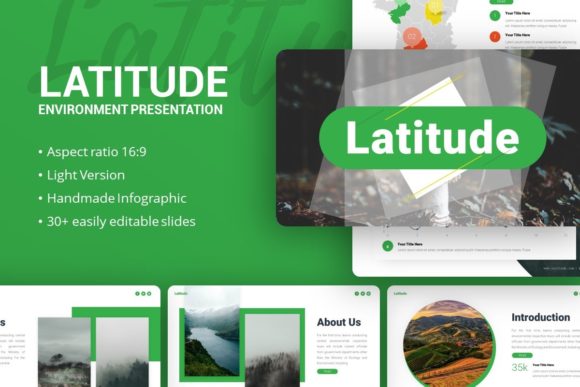
Latitude Presentation Template: A Strategic Asset for Modern Visual Communication
In the contemporary landscape of digital communication, the ability to convey complex ideas through clear, aesthetically pleasing visuals is no longer a luxury but a necessity. Whether presenting quarterly earnings to stakeholders, pitching a disruptive startup concept to venture capitalists, or showcasing a photography portfolio to potential clients, the medium is as critical as the message. The Presentation Template - Latitude emerges as a significant tool in this ecosystem, designed to bridge the gap between raw data and compelling narrative. Unlike generic slide decks that often require extensive redesigning, Latitude offers a structured yet flexible framework specifically engineered for diverse professional and creative applications.
Versatility Across Professional Domains
The primary strength of the Presentation Template - Latitude lies in its adaptability. While many templates are niche-specific, catering exclusively to tech startups or academic researchers, Latitude is constructed with a modular philosophy that serves a broad spectrum of users. Understanding how this template applies to different sectors helps professionals maximize its utility without forcing content into an ill-fitting design.
Corporate Identity and Business Reporting
For established corporations and business entities, consistency is paramount. Latitude provides a cohesive visual language that aligns with corporate branding guidelines. The template includes dedicated layouts for company profiles and business overviews, allowing organizations to present their history, mission, and team structure with professionalism. In an era where brand recognition drives trust, having a standardized presentation asset ensures that every internal meeting and external partnership discussion reinforces the company’s identity. The clean lines and structured grids inherent in the Latitude environment prevent the clutter that often plagues corporate slides, ensuring that key performance indicators and strategic goals remain the focal point.
Creative Agencies and Portfolios
Creative professionals face a unique challenge: their presentation deck must be visually impressive without overshadowing the work being displayed. For creative agencies, photographers, and designers, Latitude functions as a sophisticated gallery. The template features picture placeholders designed with drag-and-drop functionality, streamlining the process of swapping demo images for actual portfolio pieces. This is crucial for creatives who need to update their decks frequently for different pitches. The minimalist aesthetic acts as a frame rather than a distraction, allowing high-resolution photography and design case studies to breathe. Furthermore, the inclusion of pixel-perfect illustrations adds a layer of polish that signals attention to detail—a trait highly valued in creative industries.
Startups and Pitch Decks
The startup ecosystem demands speed and clarity. Investors review hundreds of pitch decks monthly, making visual hierarchy and information density critical factors in securing funding. Latitude addresses this through its handcrafted infographics and master slide architecture. Startups can utilize pre-designed data visualization slides to explain market size, traction, and financial projections without hiring a graphic designer for every iteration. The 35-slide variety ensures that founders have access to specific layouts for problem-solution narratives, competitive analysis, and roadmap timelines. By reducing the friction associated with deck creation, entrepreneurs can focus more on refining their business model and less on aligning text boxes.
Technical Architecture and Customization Capabilities
Beyond its aesthetic appeal, the functional value of the Presentation Template - Latitude is rooted in its technical construction. Users ranging from novice PowerPoint operators to seasoned presentation designers benefit from understanding the underlying mechanics that make customization efficient and scalable.
Master Slide-Based Workflow
A common pitfall in using downloaded templates is the lack of global control. Changing a font or color scheme on one slide only to find it hasn't updated across the entire deck is a frequent source of frustration. Latitude mitigates this issue by being based on Master Slides. This architectural choice means that global changes propagate instantly throughout the presentation. If a user needs to adjust the primary brand color or update the logo placement, doing so at the master level reflects across all 35 slides. This feature is particularly valuable for teams where multiple stakeholders might edit the deck, as it maintains structural integrity and prevents formatting errors during collaborative workflows.
Vector Graphics and Scalability
Resolution independence is a non-negotiable requirement for modern presentations, which may be viewed on anything from a smartphone screen to a 4K conference hall projector. All graphics within the Latitude environment are fully resizable and editable vectors. Unlike raster images that pixelate when enlarged, vector elements maintain crisp edges at any scale. This technical specification allows users to repurpose infographic elements for social media teasers, printed handouts, or large-format banners without losing quality. Furthermore, because these elements are editable within PowerPoint, users can modify individual nodes, colors, and shapes to match specific data points or branding nuances, offering a level of flexibility typically reserved for specialized design software like Adobe Illustrator.
Data Visualization Through Handcrafted Infographics
Data storytelling is a distinct skill set, and Latitude supports this through its library of handcrafted infographics. These are not merely decorative; they are functional tools for translating abstract numbers into digestible insights. The template includes various chart styles, process diagrams, and timeline visualizations that are native to PowerPoint. This means users can input their own data directly into the chart objects rather than pasting static screenshots from Excel. Native integration ensures that the presentation remains lightweight and editable, facilitating real-time updates during Q&A sessions or strategy meetings. The "handcrafted" aspect implies that these visuals have been designed with balance and whitespace in mind, avoiding the robotic look of auto-generated charts while retaining data accuracy.
Implementation Best Practices and Considerations
While the Presentation Template - Latitude provides a robust foundation, achieving optimal results requires adherence to certain best practices. Understanding the distinction between the template's capabilities and the user's content strategy is essential for effective implementation.
Navigating Asset Licensing and Preview Limitations
Prospective users must be aware of file inclusions and exclusions to manage expectations correctly. The documentation clearly notes that all images shown in the demo are for preview purposes only and are not included in the downloadable files. This is a standard industry practice intended to showcase layout possibilities without violating stock photo licensing agreements. Users should prepare their own high-quality imagery before beginning the customization process. Relying on low-resolution placeholders or stretching personal photos to fit dimensions can undermine the premium feel of the template. Investing time in sourcing appropriate visual assets—whether through original photography, licensed stock, or custom illustrations—is a prerequisite for leveraging Latitude effectively.
Leveraging Documentation for Efficiency
The inclusion of a documentation file is a critical component of the Latitude package that is often overlooked. For users unfamiliar with advanced PowerPoint features like master slides or vector editing, this guide serves as an essential manual. It bridges the knowledge gap between basic slide creation and professional presentation design. Reviewing this documentation before starting a project can save hours of trial and error. It typically covers layer management, font installation, and export settings, ensuring that the final output looks as polished in presentation mode as it does in the editing view. Treating the documentation as part of the workflow rather than an afterthought enhances both the speed of production and the quality of the final deliverable.
Content Hierarchy and Slide Selection
With 35 unique slides available, there is a risk of over-inclusion. A common mistake is using every available layout simply because it exists. Effective use of Latitude involves curation. Users should select only the slides that directly support their narrative arc. For a pitch deck, this might mean utilizing ten highly focused slides rather than thirty loosely connected ones. The template’s variety is meant to provide options, not a mandate. Maintaining a tight content hierarchy ensures that the audience remains engaged and that the key takeaways are not diluted by unnecessary visual noise. The ease of deleting unused master layouts also helps keep the file size manageable and the editing interface uncluttered.
The Role of Design Systems in Personal Branding
For individuals such as researchers, educators, and freelancers, Latitude serves as more than just a presentation tool; it acts as a personal design system. In competitive job markets or academic conferences, a distinctive visual style helps individuals stand out. Using a consistent template across lectures, portfolio reviews, and networking introductions builds personal brand equity. The clean, modern aesthetic of Latitude projects competence and organization, traits that are universally valued regardless of the specific field. For educators, the readable typography and structured layouts aid in student comprehension and retention. For researchers, the ability to present complex methodologies clearly can influence peer review outcomes and grant approvals. In these contexts, the template is not merely a container for information but an active participant in the communication strategy.
Ultimately, the Presentation Template - Latitude represents a convergence of design excellence and practical utility. By providing a comprehensive suite of editable, scalable, and professionally designed assets, it empowers users across the spectrum—from corporate executives to independent artists—to elevate their visual communication. Success with this tool depends not just on downloading the .PPTX file, but on understanding its modular nature, respecting its technical parameters, and applying it with strategic intent. When utilized correctly, it transforms the arduous task of slide creation into a streamlined process of storytelling, allowing the presenter to focus on what matters most: connecting with their audience and delivering value.