Google Slides Template - Click: A Practical Design System for Modern Presentations
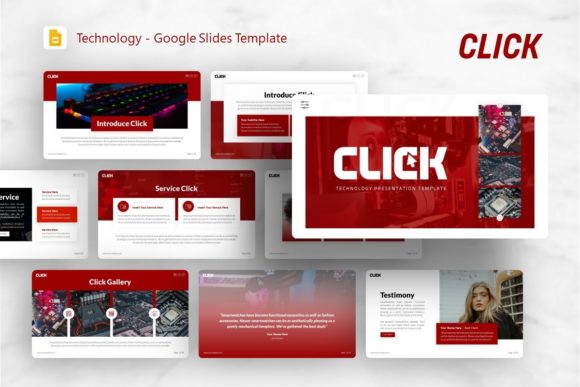
Finding the right balance between visual impact and functional clarity is often the hardest part of creating a presentation. The Google Slides Template - Click addresses this specific friction point by offering a structured yet flexible design system rather than just a collection of pretty backgrounds. While the name suggests a focus on Google’s ecosystem, this template package is fundamentally built as a comprehensive PowerPoint (.PPTX) resource that integrates seamlessly into modern workflows. It serves as a foundational toolkit for professionals who need to communicate complex ideas quickly without getting bogged down in formatting issues or inconsistent layouts.
At its core, Click is designed for versatility. It moves beyond niche-specific themes to provide a broad utility that spans creative agencies, corporate boardrooms, startup pitch decks, and personal portfolios. The value proposition here isn't just aesthetic; it is about reducing the cognitive load associated with slide design. When you are preparing for a high-stakes meeting or a client proposal, having 36 pre-structured slides based on master layouts means you spend your energy refining your narrative instead of aligning text boxes.
Real-World Applications Across Professional Landscapes
The true test of any presentation asset is how it performs under actual working conditions. Different users approach slide creation with vastly different constraints and goals, and Click accommodates these variations through its modular design.
For Startups and Entrepreneurs Pitching Ideas
When launching a new venture, founders often struggle to translate abstract business models into tangible visuals. The Click template includes handcrafted infographics specifically useful for this scenario. Instead of searching for generic charts that don't quite fit your data, entrepreneurs can utilize the editable vector graphics to visualize market size, user growth, or revenue projections. Because all graphics are resizable and fully editable within PowerPoint, a founder can adjust a timeline graphic from a three-year roadmap to a five-year forecast in seconds during a Q&A session without breaking the layout. This adaptability is crucial when iterating on a pitch deck based on investor feedback.
Creative Agencies and Portfolio Management
Visual professionals face a unique challenge: their presentation must demonstrate design competence while showcasing client work. The picture placeholder system in Click operates on a drag-and-drop basis, which streamlines the process of updating case studies. For a photographer or designer, this means swapping out portfolio images takes moments rather than hours. The pixel-perfect illustrations serve as subtle framing devices that enhance the content without competing with it. In agency settings where brand guidelines shift per client, the master slide architecture allows teams to update global colors and fonts once, ensuring consistency across dozens of slides instantly.
Corporate Reporting and Internal Communication
In larger organizations, presentations often suffer from "death by bullet point." Department heads and managers can leverage the infographic-heavy nature of this template to transform dry quarterly reports into engaging narratives. The 36-slide variety ensures there is likely a specific layout for SWOT analyses, team introductions, or project roadmaps already available. Since the files include documentation, even team members with limited design skills can maintain professional standards. This reduces the bottleneck where only one person in the department knows how to format slides correctly, democratizing high-quality communication across the company.
Understanding the Technical Workflow and Features
Before integrating Google Slides Template - Click into your workflow, it is important to understand what you are actually downloading and how it functions technically. Despite the SEO-friendly naming convention referencing Google Slides, the primary deliverable is a .PPTX file. This distinction matters because it guarantees full fidelity of the master slides, animations, and vector elements that sometimes get lost or converted poorly when moving between platforms.
The inclusion of a documentation file is a significant practical feature. Many templates fail not because of bad design, but because users cannot figure out how to edit the complex smart art or grouped vectors. Having a guide ensures that the learning curve remains shallow. Furthermore, the vector icon set included in the download prevents the common issue of mismatched visual styles. When every icon comes from the same family, the presentation feels cohesive and professionally curated, whereas mixing icons from disparate sources often makes a deck look disjointed.
Strategic Considerations Before Implementation
While the template offers robust features, potential users should evaluate their specific needs against the tool's capabilities to ensure a good fit. There are several practical factors to consider before committing to this resource.
- Platform Compatibility: Verify that your version of PowerPoint supports the advanced master slide features used in the template. While generally compatible, older versions may handle certain transitions or vector edits differently.
- Image Asset Planning: Remember that demo images are for preview purposes only. You will need your own high-resolution photography or licensed stock assets ready before starting. The placeholders define the composition, but the visual quality depends entirely on the media you insert.
- Content Volume Alignment: With 36 distinct slides, there is ample variety, but more isn't always better. Review the slide list to ensure the available layouts match your typical content density. If you primarily use text-heavy slides, verify that the template offers enough typographic variations to prevent repetition.
- Customization Bandwidth: Although the contents are easily customizable, assess whether you have the time to tailor the handcrafted infographics to your specific data. These elements are powerful but require intentional editing to be effective; using them "as is" with irrelevant data can confuse audiences.
Maximizing Outcomes Through Intentional Design
The ultimate goal of using a resource like the Click Technology Presentation template is to achieve better communication outcomes, not just faster production. Success comes from treating the template as a starting framework rather than a final product. Users who benefit most are those who respect the underlying grid system while injecting their unique brand voice.
For educators and trainers, this might mean simplifying the dense infographic slides to focus on single concepts for student retention. For marketers, it could involve adapting the corporate color palette to match seasonal campaign aesthetics while keeping the structural integrity intact. The resizable nature of all graphics means that whether you are presenting on a massive conference screen or sharing a PDF via email, the proportions remain correct and legible.
Ultimately, this template bridges the gap between raw content and polished delivery. It acknowledges that modern presenters are multitaskers who need reliable tools that adapt to various contexts—from a freelancer pitching a solo project to a multinational corporation reporting annual earnings. By providing a pixel-perfect, master-slide-based foundation, it removes the technical barriers to entry for professional design, allowing the presenter to focus on what truly matters: connecting with the audience and delivering a clear, compelling message.